Insight

DOE Disciplinary Proceedings: Tough Lessons for Arizona Teachers

DOE Disciplinary Proceedings: Tough Lessons for Arizona Teachers

Alden A. Thomas

Written by Alden A. Thomas

Published: September 12, 2022

The Arizona Department of Education (“DOE”) is responsible for licensing and overseeing educators in the state. All Arizona teachers must maintain a teaching certificate to be eligible to teach and remain in good standing with the DOE. Teachers must apply to renew their certificates every six years.

The DOE also oversees disciplinary proceedings for teachers accused of engaging in unprofessional and/or immoral conduct, as those terms are defined under Arizona law. Such conduct includes criminal acts, including the use of illegal drugs, submitting fraudulent requests for reimbursement, engaging in sexual conduct with a student, etc. However, many teachers are surprised to learn they can be disciplined for non-criminal acts, including engaging in conduct which would “discredit the teaching profession.” As Arizona statutes do not further define what discrediting the teaching profession conduct could include, this provision is often used as a “catch all” to discipline teachers who have allegedly engaged in inappropriate conduct that does not otherwise fit within the statutory definitions of unprofessional and/or immoral conduct.

What Happens When the DOE Receives a Complaint about a Teacher?

When the DOE receives a complaint accusing a teacher of engaging in unprofessional and/or immoral conduct, it assigns an investigator to look into the issue further. Investigators typically interview witnesses, review relevant documents, and offer the teacher an opportunity to submit a statement. If the investigation reveals evidence that the teacher potentially engaged in unprofessional and/or immoral conduct, the Arizona Attorney General may file a formal complaint against the teacher.

Once a complaint is filed, the teacher will have the option to attend a hearing before the Professional Practices Advisory Committee (“PPAC”). Teachers are permitted to present evidence and call witnesses at PPAC hearings. However, unlike a formal legal proceeding, the rules of evidence do not apply. For example, hearsay that is inadmissible in a court proceeding is admissible in a PPAC hearing. The PPAC is responsible for reviewing all evidence presented at the hearing, making findings of facts and conclusions of law, and making a recommendation to the State Board of Education about what discipline it believes is appropriate, if any. The Education Board then has the option to accept, reject, or modify the PPAC’s recommendation.

What Is at Stake?

Teachers accused of unprofessional and/or immoral conduct face a wide array of potential discipline. The Board may issue a letter of censure, suspend the teacher’s certificate, or revoke the certificate. Any such disciplinary action could have substantial consequences on the teacher’s current and future ability to teach. Any sanctions imposed against teachers become part of their permanent records, and the Board forwards that information to a national database. Disciplinary records follow teachers even when they move to a different state.

Consult with an Attorney

Educators accused of unprofessional and/or immoral conduct should consult with an experienced education attorney. An attorney will help the educator navigate disciplinary proceedings and explore options to mitigate the risk of severe disciplinary action.


Learn More About:

Education Law

Related Articles

History Eraser


by Gregory Sirico

Penguin Random House and several other major book publishing houses filed litigation against Florida education leaders who recently passed a book ban law.

Penguin logo in front of black and white books

Tampa Appeals Court ‘Sends Clear Message,” Ensuring School Tax Referendum Stays on Ballot


by Gregory Sirico

Hillsborough County's tax referendum is back on the 2024 ballot, promising $177 million for schools and empowering residents to decide the future of education.

Graduation cap in air surrounded by pencils and money

"Lawyer of the Year"


Lawyer with suit posing and smiling for headshot

Laurie R. Bishop

Education Law

Boston, MA

2024

"Lawyer of the Year"


Lawyer wearing glasses and suit as he poses for headshot

Thomas B. Mooney

Education Law

Hartford, CT

2024

Pennsylvania Court Ruling Could Close School Funding Gap


by Gregory Sirico

Best Lawyers highlights the current legislative battle to close the Pennsylvania school funding gap.

Animated child stands on top of a tower of books

What the Courts Say About Recording in the Classroom


by Christina Henagen Peer and Peter Zawadski

Students and parents are increasingly asking to use audio devices to record what's being said in the classroom. But is it legal? A recent ruling offer gives the answer to a question confusing parents and administrators alike.

Women teaching a class with security camera symbols looming

Laurie R. Bishop - Boston 2020 Lawyer of the Year


by Best Lawyers

Laurie R. Bishop advises Boston colleges and universities on complex legal issues in education law

Laurie R. Bishop - Boston 2020 Lawyer of the Year

Getting Schooled


by Janice Zhou

Public-education policy is fraught throughout the United States, and Texas is certainly no different. Two leading education lawyers weigh in on accountability, resource inequities, and why “teaching to the test” has been a bad deal for kids.

A student facing a yellow bus wearing a backpack

Why Cariola Díez Pérez-Cotapos Developed Its Own Legal Tech


by Best Lawyers

Juan Pablo Matus of Cariola Díez Pérez-Cotapos, 2019 "Law Firm of the Year" award for Corporate and M&A Law in Chile, discusses his firm's joint venture with Cognitiva in creating Lexnova, a legal AI system.

Two small figures on a surface reaching toward a puzzle piece held by a hand above them

What Makes a Good Education Attorney?


by Best Lawyers

Alyce Alfano of Shipman & Goodwin discusses her 2019 "Lawyer of the Year" award for Education Law in Connecticut.

Alyce Alfano of Shipman & Goodwin is the 2019 "Lawyer of the Year"

What the Harvard Trial Means for Affirmative Action


by John Saxon

Students for Fair Admissions is challenging Harvard's policy of holistic admissions—and might change the future of affirmative action.

Steps of courtroom leading to Harvard's affirmative action case

Helping Berkeley Law Train the Next Generation


by Best Lawyers

The attorneys at Gillin, Jacobson, Ellis, Larsen and Lucey

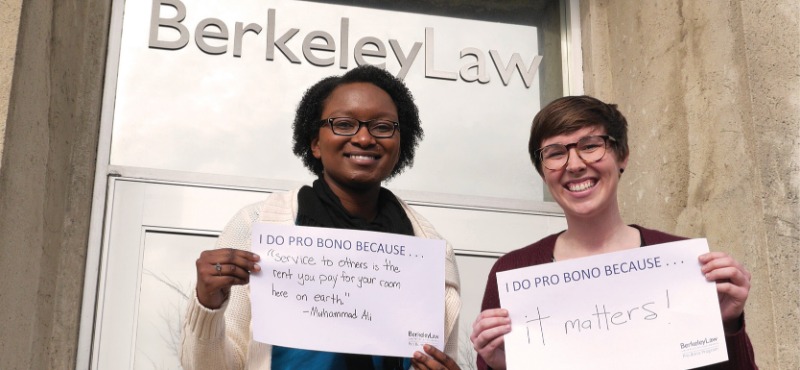
Two Berkeley Law Students holding signs

An Interview With Elizabeth B. Meers of Hogan Lovells


by Best Lawyers

The Education Law "Lawyer of the Year" award-winner in D.C. discusses how she came into her practice and her most memorable cases.

Elizabeth Meers, an Education Law "Lawyer of the Year" award-winner in D.C.

The Profit in Nonprofits


by Patricia Brown Holmes

Volunteer organizations are the lifeblood of the legal profession. Their model ought to be embraced by all.

Clock ticking with plant growing in the center and two businesspeople in red

Jumping Hurdles toward the Finish Line


by Meredith Aldridge, Colleen Welch, and Alicia Hall

Forty-five years of progress with Title IX.

Businesswoman and men jump hurdles with a building overlayed in the background

Trending Articles

Recognizing Legal Leaders: The 2027 Best Lawyers Awards in Australia, Japan and Singapore


by Jamilla Tabbara

Market drivers, diversity trends and the elite practitioners shaping the legal landscape.

Illustrated maps of Australia, Japan and Singapore displayed with their national flags, representing

Holiday Pay Explained: Federal Rules and Employer Policies


by Bryan Driscoll

Understand how paid holidays work, when employers must follow their policies and when legal guidance may be necessary.

Stack of money wrapped in a festive bow, symbolizing holiday pay

Can a Green Card Be Revoked?


by Bryan Driscoll

Revocation requires a legal basis, notice and the chance to respond before status can be taken away.

Close-up of a U.S. Permanent Resident Card showing the text 'PERMANENT RESIDENT'

How Far Back Can the IRS Audit You?


by Bryan Driscoll

Clear answers on IRS statutes of limitations, recordkeeping and what to do if you are under review.

Gloved hand holding a spread of one-hundred-dollar bills near an IRS tax document

US Tariff Uncertainty Throws Canada Into Legal Purgatory


by Bryan Driscoll

The message is clear: There is no returning to pre-2025 normalcy.

US Tariff Uncertainty Throws Canada Into Legal Purgatory headline

Can You File Bankruptcy on Credit Cards


by Bryan Driscoll

Understanding your options for relief from overwhelming debt.

Red credit card on point-of-sale terminal representing credit card debt

Musk v. Altman: The Lawyers Behind the Case


by Jamilla Tabbara

Meet the Trial Lawyers Shaping One of AI's Biggest Legal Disputes.

Portrait photos of Elon Musk and Sam Altman positioned in front of the OpenAI logo.

How AI Is Changing the Way Clients Find Lawyers


by Jamilla Tabbara

Best Lawyers CEO Phil Greer explains how AI-driven search tools are reshaping legal marketing and why credibility markers matter.

AI chat bubble icon with stars representing artificial intelligence transforming client-lawyer conne

The Legal Teams Behind the Blake Lively–Justin Baldoni Settlement


by Grace Greer

A closer look at the legal teams and attorneys involved in the Blake Lively–Justin Baldoni litigation and its resolution.

Split-screen image of Blake Lively and Justin Baldoni

Colorado’s 2026 Water Rights Battles


by Bryan Driscoll

A new era of conflict begins.

Colorado Water Rights 2026: A New Era of Conflict headline

When Is It Too Late to Stop Foreclosure?


by Bryan Driscoll

Understanding the foreclosure timeline, critical deadlines and the legal options that may still protect your home.

Miniature house model on orange background surrounded by thumbtacks representing foreclosure

Can You Go to Jail at an Arraignment?


by Bryan Driscoll

Understanding What Happens at Your First Court Appearance.

A heavy chain lying on the ground in the foreground with a blurred figure standing in the background

What’s the Difference Between DUI and DWI?


by Bryan Driscoll

Understanding the terminology and consequences of impaired driving charges.

Driver during nighttime police traffic stop with officer's flashlight shining through car window

Canadian Firms Explore AI, But Few Fully Embrace the Shift


by David L. Brown

BLF survey reveals caution despite momentum.

Canadian Firms Explore AI, But Few Fully Embrace the Shift headline

Is Federal Inaction Crippling New York’s Gun Laws?


by Bryan Driscoll

Tragedy tests the limits of Empire State gun control.

limits of new york gun laws headline

How to Choose a Personal Injury Lawyer


by Bryan Driscoll

Finding the right legal representation after an injury is a critical decision that requires careful evaluation. 

3D scene representing the deliberative process of choosing a personal injury attorney