
When the lawyers at Chang Klein LLP speak, juries listen. The Southern California litigation boutique has built a formidable reputation for crafting winning arguments that result in multimillion-dollar recoveries and precedent-setting verdicts that hold the powerful to account and result in real change for their clients and the public at large.
It helps that the firm is stacked with attorneys who have mastered the arts of communication and persuasion. Chang Klein specializes in taking on complex, high-impact cases. “We turn cases into causes” is the firm’s motto, and doing so requires an ability to tell jurors stories that are both powerful and unforgettable.
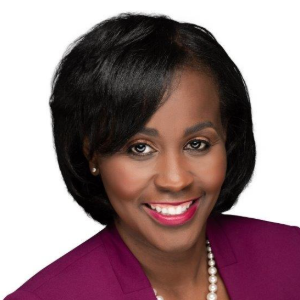
A compelling story, in fact, is one of the primary criteria the firm uses to vet potential cases. “If we’re captivated by the story, then that motivates us,” said Deborah Chang, who along with Candice Klein is one of the firm’s name partners and co-founders.
- Chang Klein LLP has secured headline-making verdicts by turning complex litigation into clear, persuasive stories juries can follow, including an $8.5 million verdict holding Uber liable for a driver assault.
- The firm uses focused trial themes, visuals and modern presentation tools to keep jurors engaged and simplify high-stakes cases with significant financial and public safety implications.
- Creative legal strategies have helped clients pursue broader recoveries, including tens of millions for lifelong care in a catastrophic injury case that was successfully reframed beyond medical malpractice limits.
- From a $160.5 million traumatic brain injury verdict to cases that influenced safety standards and public protections, the article shows how impactful litigation can drive accountability and lasting change.
Striking a Chord With Jurors
The firm’s approach is resulting in an ever-growing list of courtroom successes. Among the most recent victories was a headline-grabbing $8.5 million jury verdict against Uber. In that case, Jaylynn Dean v. Uber Technologies, Inc., Chang served as co-trial counsel and helped tell the story of a young woman who was sexually assaulted by an Uber driver in Tempe, Ariz. Chang and her fellow trial lawyers convinced jurors that the company should be held liable for the driver’s actions.
It was a groundbreaking win. Uber has long contended that its drivers are independent contractors—or gig workers—and the company is not responsible for their actions. Just a few months before the trial in Arizona, a state court jury in California agreed with that stance. They found that Uber could not be held liable for an assault committed by a driver, even though jurors acknowledged that the company failed to maintain its safety practices.
In response, Chang and a multi-firm legal team developed a new strategy and story for the Arizona trial. Uber’s advertising asks passengers to “ride with Uber” when they need a reliable way home and touts the company’s commitment to safety. A passenger, therefore, might reasonably believe a driver was acting as an agent of the company and had been given authority to act on the company’s behalf.
“They spend billions of dollars on marketing to say, ‘Trust Uber. We screen our drivers. We’ll get you home safe,’” Chang said. “Instead, they were handing vulnerable women on a candy dish to sexual predators that they had not screened. Those women would not have been in that position had Uber not put the two together.”
The argument that drivers are agents of the company struck a chord. As one juror told the media after the trial, “On their own social media they say you’re taking an Uber with your Uber driver. I think it was easy for [the plaintiff] to believe that the driver was an employee of Uber.”
A Story the Jury Can Digest
In a complex case like Uber, Chang Klein’s lawyers must carefully select facts that will draw in jurors. Chang compares it to a buffet table filled with delicious food. Most cases have “way too many facts,” Chang says. “Like a buffet, no one can eat it all.”
Presenting all of those facts—the entire buffet table, as it were—will result in a jury losing its way. “They cannot digest everything,” Chang said. Instead, a good trial lawyer will recognize which facts “are only interesting to the lawyer and will figure out how to put the best parts of the buffet onto a juror’s plate.”
Chang Klein is also adept at bringing stories to life. It’s one thing to tell jurors about an issue, it’s quite another to show them information via graphics, 3D animations, photos, slides, music, video, and other trial technology.
Those storytelling tools are especially critical in an age of constant distraction. “Jurors are so used to TikTok and other social media. You’ve got to grab their attention, and you’ve got to do it in a short amount of time,” Chang said. “Jurors are all accustomed to instant knowledge, so you have got to be able to address them in a way that doesn’t waste their time.”
Creative Solutions That Help Clients
As in the Uber trial, thinking outside the box is a Chang Klein hallmark. In one case, for instance, Chang took on a new client with a catastrophic injury whose case had previously been treated as a medical malpractice matter. Because it was a medical malpractice case, state law limited the amount of damages the client could seek.
Chang knew the case required a completely different approach. After performing an exhaustive investigation and relying on her deep knowledge of the law and her connection with the client, Chang reframed the matter as a dependent adult case. In doing so, she won tens of millions of dollars for the man’s lifelong care—a result that would have been impossible if the case had remained in its original form.
Chang Klein lawyers have won similar victories in a string of jury verdicts in high-impact cases, including but not limited to:
- $160.5 million for a traumatic brain injury sustained at a nightclub. The verdict, one of the largest in Nevada history, led to significant changes in the private security industry.
- $34.5 million on behalf of a 19-year-old who lost a leg after being struck by a truck.
- $20.5 million for the wrongful death of a child struck by a car at an improperly placed school bus stop.
- $17 million for the wrongful death of a visually impaired man, the largest non-economic wrongful death verdict for an adult child in Los Angeles history.
- $4 million for non-economic damages in a wrongful death case deemed one of the most important trial verdicts relating to the “going and coming” rule. The verdict was also affirmed on appeal.
The Power of Empathy
The dollar figures, while impressive, are just one aspect of the story. Chang has been honored by her peers in the legal profession for her groundbreaking trial work. In March, for example, the Consumer Attorneys Association of Los Angeles inducted her into its hall of fame.
Chang’s cases have led to greater protections for visually impaired transit riders nationwide, established a duty by California’s colleges and universities to protect students from known dangers in the classroom, improved conditions for prisoners with AIDS, and defended the constitutionality of the Violence Against Women Act.
Those matters reflect another key element of Chang Klein’s litigation approach—empathy. “Empathy moves us and enables us to find the points in the story that matter,” Chang says. “We take cases that are meaningful to us and that we truly believe in.”
Clients have noticed. They routinely cite the firm’s sympathetic and attentive handling of their matters in reviews of the firm. “We really enjoy what we do,” Chang said. “We love our clients. We love the causes. And we are committed to doing everything we can to improve people’s lives and to help them fight for justice.”