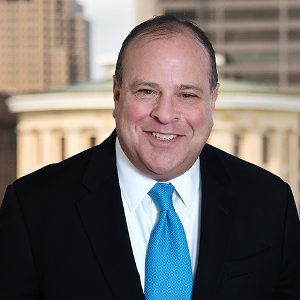

Adam Leitman Bailey, P.C. was founded in 2000 and within months, its namesake was already building a reputation in New York as an energetic lawyer who thrived in high-stress situations and could still favorably resolve matters for clients. Being in the busiest city in the country put Bailey in touch with peers, clients and companies from all walks of life, but no law school class could have prepared him for the unorthodox scenarios and personalities that Rivas v. McDonnell would present.
In 2002, another attorney referred Pura Rivas, a dental professional and single mother, to Bailey as she faced the possible loss of a two-family home in Brooklyn. She had signed an agreement with the owner of the home, but the deed was not properly recorded, and the owner had closed negotiations with another buyer prior to the sale to Rivas. Bailey accepted the case for a nominal fee and got to work.
Pura’s daughter, Stephanie, was 10 years old and present for nearly all the meetings. She had a front seat during a legal matter that would normally be over the head of a child her age. But she joined Bailey regularly and observed the mechanisms of the law: the legal papers concerned deeds, recording priorities and competing claims to ownership.
“We were moving fast and, despite her family’s stability being at stake, I could see Stephanie was exhilarated and that provided me with an extra degree of confidence,” said Bailey. “I had been a camp counselor, so being around kids Stephanie’s age was still pretty natural. This case was not about money, especially since we accepted it mostly pro bono. It became a cause. I wanted to show her that the legal system could protect her and the people she loved.”
Under New York law, the first to record without notice of a prior sale becomes the rightful owner. Bailey had an instinct that the other buyer had not yet submitted or mailed their deed, which can take two weeks to process. “We bet on that long shot. Stephanie waited in line with us at the recording office at 7:30 a.m. the next business day to have Pura’s deed recorded.”
The plan was a success. Two days later, the computer printout indicated that Pura's deed recorded the purchase of her home 24 hours before the other buyer.
“This gave us a stronger leg to stand on to retain possession of the home,” Bailey recalled, “but just a few weeks later we were arguing in Kings County Supreme Court against the buyer and his experienced attorney, who was provided by his title company.”
- A race to record a deed helped protect a Brooklyn family’s home and shaped New York real estate practice.
- In Rivas v. McDonnell, the 2003 appellate ruling confirmed that recording priority can determine competing ownership claims.
- The case shows how swift action, focused advocacy and cost-conscious representation can matter when a client’s housing and finances are at risk.
- Read how the matter also influenced Stephanie Rivas’ path toward a legal career and aspirations for the bench.
The Appeal That Saved A Home
Despite Pura’s earlier recording, the trial court denied her motion for summary judgment, leaving her homeownership, savings and future in jeopardy.
Bailey appealed immediately.
In 2003, the Appellate Division, Second Department, reversed the prior decision in Rivas v. McDonnell, 308 A.D.2d 572. The court held that the competing purchasers could not obtain the benefit of New York’s Recording Act because they did not record first.
“Once Pura established recording priority, the court concluded that the question of whether she had paid valuable consideration was immaterial to the outcome,” said Bailey, who has been recognized in Best Lawyers® since 2015 for Real Estate Law in New York. “The Appellate Division directed entry of judgment declaring Pura’s deed valid, and the competing deed invalid.”
The holding confirmed the statewide principle: recording priority can control competing claims to real property. The result was an early achievement for Adam Leitman Bailey, P.C., as Rivas became a published appellate decision cited regularly by title and real estate lawyers in New York. But for Pura and Stephanie Rivas, the decision was personal and immediate. They retained their home. Bailey assisted in removing the prior owner and others occupying the building, and Pura later had paying tenants who could provide additional income.
Bailey’s work transformed a desperate, uneven fight into both a practical victory for his client and a published appellate decision that lawyers and courts could invoke in future title disputes. The title company that had opposed him was so impressed that it later hired him, and it has become one of his most valued clients
Above all, the impact of Bailey’s advocacy had made an indelible impression on Stephanie Rivas, who, even before she was a teenager, found her life’s calling.
Unknowingly Inspiring A Future Legal Leader
The legal victory remains important to Bailey, but the most enduring part of the Rivas story is Stephanie, whose perceptiveness and inquisitive nature stood out.
Nearly 25 years later, in February 2026, Bailey attended the induction ceremony of Hon. Norma Jean Jennings, who made history as the first out queer Black woman to serve on the Supreme Court of New York. During the acknowledgements, Bailey heard a name that stopped him: Stephanie Rivas. After the ceremony, he found Rivas and recognized her as the same child who had waited with him in line at the recording office.
The reunion was more emotional than Bailey had expected. At the time, she was a court attorney for the Supreme Court of the State of New York and practiced as an associate at a large NY real estate firm before that, focusing on litigation involving rent regulation disputes and coverage claims under the Loft Law.
The next day, Stephanie wrote to Bailey to explain how he had inspired her to pursue a career in law with aspirations for a judgeship. She had gone from humble beginnings and the brink of displacement to having graduated from John Jay College of Criminal Justice in New York and from SUNY Buffalo Law School and was the recipient of the Dominican Bar Association Scholarship in 2015 and the Puerto Rican Bar Association Scholarship in 2014.
“This wonderful and courageous child grew into a confident and successful young professional who was making a difference in her clients’ lives,” said Bailey, who noted the ordeal in further depth in his best-selling book, Finding the Uncommon Deal. “Our advocacy was reflected in the focus of her work, which was truly heartwarming. Perhaps even more incredible was that she was applying for a judgeship, which I hope she achieves.”
Bailey does not claim credit for Stephanie’s achievements. He noted that her path reflects her own intellect, perseverance, character and commitment to public service. But Bailey is deeply honored that, at a formative moment in her life, Stephanie Rivas saw a lawyer use skill and urgency in service of a family that could not afford to be treated as another case file.
The case’s deeper legacy is the reminder that compassionate advocacy is not passive or sentimental. It means recognizing what a client stands to lose, acting quickly when the margin for error is measured in hours, and continuing to fight even when the odds are against you.
“The case remains proof that a lawyer can be an underdog and still prevail,” Bailey said, “especially when the law, the facts and the client’s human story are pursued with equal determination.”