I've been doing SEO long enough to have watched linkbuilding tactics get rewritten three or four times. The 2026 rewrite is the most interesting one, because for the first time I am not as concerned with whether a link is “followable” or, indeed, if there is even a link at all.
- AI search changes the playbook: Law firms should pursue credible mentions, accurate descriptions and useful third-party coverage, not just backlinks.
- Branded mentions correlated more strongly with AI visibility than domain ratings, while YouTube mentions showed the strongest correlation in a 75,000-brand study.
- Audit firm profiles, bios and practice descriptions for outdated or conflicting information across trusted sources.
- Earn coverage through reporter interviews, original data, CLE panels, video and independent recognition while avoiding self-promotional listicles.
What Hasn't Changed
Links still work. Google's ranking systems still use them, and they are still valuable, especially when they come from a reputable source. Google's spam policies still describe link spam as "creating links to or from a site primarily for the purpose of manipulating search rankings," and buying links for ranking purposes is still a violation of those policies. The old advice to earn links from relevant, reputable publications rather than rent them from link farms holds up perfectly well.
Also unchanged: the fastest, safest links for a law firm are still byproducts of real professional activity. This includes bar association profiles, court and CLE speaker pages, recognition from legal directories and awards like Best Lawyers… as well law school faculty and alumni listings, sponsorship of a local legal aid clinic, a quote in your city's business journal and any number of editorial links from trusted publications. Those existed before AI search and they're even better positioned now, for reasons I'll get to.
Toxic links still deserve the same treatment they always did: mostly none. Google's systems ignore the overwhelming majority of spam links automatically. Disavow files are pointless, at best, unless you have a backlink-based manual penalty, which you would be notified about via Google Webmaster Tools. You have no control over who links to your website, and Google knows this.
Why I Stopped Caring Much About Nofollow Tags
Many SEOs will still overlook a placement in a state bar publication or a legitimate news outlet because the links are “nofollowed”. This means, when it comes to Google’s more classic algorithms, those links do not pass PageRank.
A nofollowed link in a respected legal publication does three things a followed link from a pay-to-play guest post network doesn't:
- It puts your name in front of the audience you want
- It creates a durable public record that a credible third party associated your firm with a particular kind of work
- It lives in a document that gets crawled, indexed, and read by the large language models (LLMs) now writing answers about your practice area.
I don't ignore the attribute. If I'm paying for a placement, it needs rel="sponsored" or rel="nofollow,” because that's Google's own stated compliance path, and it keeps you cleaner under attorney advertising rules. But the attribute no longer decides whether I pursue an opportunity. Relevance and audience do, along with the context and sentiment of the content in which the link resides.
The Unlinked Mention Got Promoted
This is the biggest change in how I allocate effort as we move from SEO to AIO. I now actively pursue mentions even if they don’t carry a link, as long as the mention is positive and accurate. Of course, a link would be great, but it is no longer required for me to expend effort on acquiring the mention.
LLM-based AI answer engines aren't traversing a link graph to decide who to name when someone asks who handles construction defect litigation in your city. They're drawing on what the corpus says about entities. An unlinked sentence in a trade publication saying your firm (which is an entity) represented the plaintiff in a notable case is a usable fact, regardless of whether or not that page also has a link to the firm’s website.
Ahrefs published a correlation study in December 2025 covering 75,000 brands, measuring which signals track with being mentioned in ChatGPT, AI Mode, and AI Overviews. Branded web mentions correlated at roughly 0.66 to 0.71 across the three surfaces. Domain Rating came in around 0.27 to 0.33. Raw backlink counts were weak. YouTube mentions were the strongest single signal, at around 0.74.
Correlation isn't causation, and a study of 75,000 mostly non-legal brands proves nothing about your practice specifically. But it matches what I see when I audit a firm: the ones that get named in AI answers are the ones that show up in other people's writing, and in trusted legal awards, as opposed to the ones with the highest domain rating (DR), or similar link-based metrics.
The Real Question: What is Being Said About You, Where, and Is It Accurate?
Run the queries and prompts a prospective client would type into their favorite AI chatbot, or search engine. Read the answers as if you were opposing counsel looking for weaknesses.
Does the answer name your firm at all? Is the practice area right? Do the models still associate you with a partner who left in 2022? Are you described as a plaintiff's shop when you've been defense-side for a decade? Is the case result it cites actually yours? Is it pulling from a directory profile you abandoned in 2019? Which sources does the answer cite? Does it mention your awards and other recognitions?
If any of those elements are off, the fix is almost never a link. It's correcting the underlying sources: stale directory profiles, an out-of-date Wikipedia or Wikidata entry, an old press release outranking your current positioning, a practice-area page that never says in plain language what kind of matters you take, and instead relies on flowery text (aka marketing-speak).
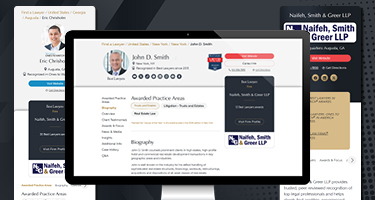
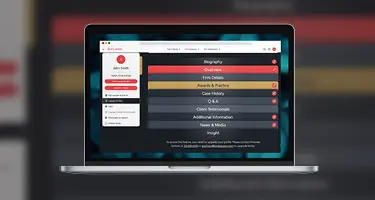
Related: How to Optimize Your Best Lawyers Profile for AI Discovery
Start with what you control and can correct directly: Google Business Profiles, state bar profiles, Justia, Martindale, Avvo, Chambers and Best Lawyers and Best Law Firms listings, LinkedIn pages for the firm and attorneys... Make them consistent. Use the same firm name in exactly the same way every time. Use the same practice-area language, and the same description of who you represent. Models reward consistency across sources, because consistency is what corroboration looks like. Do you have stale case statistics that don’t agree with more current ones? Did your offices move, but the old address is still associated with the firm somewhere? Did you drop or pick up a practice area without updating the firm description or attorney biography?
How to Earn Third-Party Mentions
The mechanics are old-fashioned, which is the good news. For example:
Be a source. HARO (Help a Reporter Out) is gone, but the model survives at Qwoted, Featured, and Source of Sources, and other platforms. Attorneys are unusually well suited to this because reporters need someone who can explain a statute on deadline. Answer fast, answer specifically and don't pitch the firm. Also, don’t bother asking for a backlink. They’ll give it or they won’t. As stated above, a mention is worth getting, even without the link.
Publish something a reporter can cite. Original data beats opinion every time. Analyze three years of verdicts in your jurisdiction. Survey your own intake on a question nobody has numbers for. One defensible statistic gets quoted for years, and every quote is a mention.
Show up where the record gets written. CLE panels, bar committee work, amicus briefs, local board seats, law school guest lectures. Each produces a public page with your name on it, and most of them get indexed by search engines, and cited by LLMs.
Take video seriously. Given how strongly YouTube mentions track with AI visibility, a partner explaining a practice area on camera (whether on your channel or someone else's video podcast) is underpriced right now for most firms. Content creators are hungry for experts to interview, but you need to let them know you’re interested instead of waiting for them to knock on your door.
Monitor and convert selectively. Set alerts for the firm name and each partner. Pay attention to the context of the mention, as well as its accuracy. In the olden times of SEO, you might do this to send outreach asking for links from an unlinked mention. These days, you should be more concerned with how your brand or person is represented in the content. Instead of reaching out to ask for a link, reach out to correct misunderstandings, provide a quote, or to give the writer your contact information so they can reach out for future content.
The Listicle Problem
One tactic that did particularly well in the first year of AI-based discovery is the self-serving "best of" listicle. You've seen the pattern: A firm publishes "The 10 Best Personal Injury Lawyers in Phoenix" and ranks itself first. This can happen on their own site, or they could publish such listacles on cheap off-site blogs.
In early 2026, a study by Lily Ray documented seven companies that had built large libraries of self-promotional listicles ranking themselves number one, and tracked organic visibility declines of roughly 29% to 49% over a two-week window following a December, 2025 Core Update by Google.
Google's review guidance asks for demonstrated first-hand knowledge, evidence of actual evaluation, discussion of both benefits and drawbacks based on original research, and an explanation of what sets something apart from comparable alternatives. A page that ranks its author first and pads the list with nine competitors fails every one of those tests. Google's separate site reputation spam policy covers the related pattern of publishing content on a host site mainly to borrow that host's ranking signals, which is worth knowing before you sign a syndicated content deal on someone else's domain.
What to do instead:
- Write the comparison you're qualified to write, and leave yourself out of it. "How to evaluate a construction defect attorney in Arizona," with real criteria and real tradeoffs, is useful, gets cited, and carries no policy risk.
- Put the evaluation on someone else's page. The listicle you want to appear in is the one a journalist, a bar publication, or an independent directory wrote.
- Earn recognition with trusted awards like Best Lawyers or Best Law Firms.
- Publish the underlying data instead of the ranking. "Median settlement timelines by county, 2023–2025" is the kind of page that ends up inside other people's listicles.
- If you must publish a ranked list, disclose the bias and show the method. State your criteria, state your interest, and be honest about where you don't fit.
What I Measure Now
I still track referring domains, because links are still important, and I want to know whether anything is happening at all. But the metrics that drive decisions are different:
- Distinct third-party sources mentioning the firm, linked or not
- Whether AI answers to core prospect queries name the firm, and whether the description is accurate.
- Share of voice against the three or four firms you actually compete with for the same matters.
- Whether the source is trusted as an independent recommendation, such as whether it is peer-reviewed or pay-to-play.
- Consistency of how the firm is described across the top 10-20 sources that mention it.
The old scoreboard measured how much authority you had accumulated. The new one measures whether the internet describes your firm favorably – and correctly – to someone about to hire a lawyer.
Related Content from Best Lawyers
- AI Changed Legal Search. The Legal Industry Is Still Playing Catch-Up
- Best Lawyers Launches ChatGPT App
- The AI Search Revolution and How It Affects Legal Marketing
- How to Optimize Your Best Lawyers Profile for AI Search
- How AI Is Changing the Way Clients Find Lawyers
- AI Legal Search Is Moving From Keywords to Intent
- What AI Visibility Means for Lawyers
- How to Make Legal Content Easier for AI Search to Read