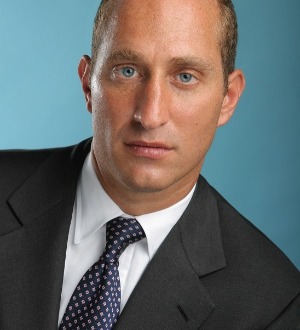
By Laurie Villanueva
Adam Leitman Bailey walked into an overcrowded entrance to a building, looked at the owners of the Spencer Street condominiums, and started explaining what many of them already knew. Most of these owners were buying their first homes to start their families and had invested their life savings.
Many of the owners had faces in their late 20’s to early 30s and heard rumors that the many housing defects were not their biggest problems — they stared down the barrel of possible foreclosure. Although many of them were eloquent speakers, on that night, no one said a word except for the balding lawyer in the navy blue suit carrying an oversized Coach briefcase.
Bailey didn’t hold back when outlining the reality of the buyers’ circumstances — they sunk their life-savings into homes built by developer Mendel Brach, who had tricked two government agencies. Brach lied to the Department of Buildings by stating that would be building apartments reserved for faculty members at a nearby Yeshiva so they could exceed the five-story zoning limit. Brach then lied to the State Attorney General’s office, submitting a plan to sell all 72 units of the four, nine-story buildings on the free market, without any mention of selling to Yeshiva faculty. For the government, the only just resolution at the time would be to demolish the buildings and apply to rebuild again.
“The bottom line is the rules are there to be bent, it’s just only the developers can bend them apparently,” Daniel Weintraub, a resident, told City Limits during the investigation.
The purchaser were appalled by the units’ conditions: unfinished floors, faulty electricity, unstable walls, mold, and bursting pipes, among other issues. One buyer told a local TV station that they invested in “the Enron of housing in New York City.”
“[Brach] recklessly and intentionally built an unsafe building that never should have gotten the Department of Buildings’ approval,” Adam Leitman Bailey told the New York Times. “He’s killed the financial lives of hundreds of people.”
Investigation revealed that the buildings required over nine million dollars of remediation to the exterior, interior and mechanicals like the pipes and electricity, and the new residents faced building sponsors with no shame - Brach and the other sponsors involved in the project put up every roadblock imaginable to delay the remediation. And without remediation, the buildings could not be issued a permanent certificate of occupancy, which allows residents to legally use, rent, refinance and sell the units. This meant the buyers were sitting on essentially worthless properties.
“We all closed in 2004 and we’ve all been paying our mortgages on what is a valueless property, if the city chooses not to issue a certificate of occupancy,” said Sara Monestime, a buyer, to The Real Deal in 2009.
The buyers’ representation prior to Adam Leitman Bailey, P.C. taking on the case failed to push back on Brach and the sponsors’ efforts to evade accountability, even entering a settlement agreement that eliminated any right to commence a lawsuit against the building sponsor.
“When you deal with these city agencies, I’m learning, logic goes out the friggin’ window,” Monestime told the City Limits. “They make the rules. They make the rules. They make no sense to anybody else and they can change the rules when they want.”
But that night in the entranceway, Adam Leitman Bailey presented a way out for the distraught buyers.
Achieving retribution required Adam Leitman Bailey P.C. to apply pressure from all angles. Adam Leitman Bailey and his team lobbied local politicians and the Department of Buildings to move forward with properly placing the blame for the condominiums’ state of disrepair on Brach and the building sponsors and compel them to facilitate the repairs. Once Adam Leitman Bailey, P.C. also involved the Office of the Attorney General in a lawsuit, they successfully negotiated an agreement with Brach that would lead to either a complete buyout of the 72 units or a multimillion-dollar judgment against him. This was the first guarantee of progress these buyers had since purchasing the units.
With Brach unable to deliver on the buyout or individual efforts to fix the buildings, ALBPC and the Attorney General’s Office moved forward with the judgment. Brach was not only required to pay $10.9 million to the residents so they could make the necessary repairs, but also had to issue amendments to any future sale offering plans for the condominiums that outlined Brach’s failure to comply with zoning or disclose the many construction shortcomings.
But the litigation win from Adam Leitman Bailey, P.C. extended beyond simply rectifying the financial losses these residents experienced. The lawsuit also barred Brach from real estate security privileges, meaning he could not participate in future real estate development and sales, until at least five years after he satisfied all the settlement’s requirements, a novel requirement that is exceedingly rare in real estate judgments.
Brach continued to claim he could not pay the $10.9 million for repairs, so Adam Leitman Bailey’s work extended beyond the courts. He and his team continued lobbying the Department of Buildings, and they succeeded in convincing the Department of Buildings to reduce the number of violations that was required to be corrected. The Department no longer required that the buildings satisfy the original five-story neighborhood restriction, nor did it require the buildings to be reserved for Yeshiva faculty housing.
Eventually, with the help of the Attorney General’s Office and the neighborhood’s residing City Councilwoman, the buyers achieved a permanent certificate of occupancy for their buildings so long as the residents made efforts towards completing the necessary repairs, a reality that at one time seemed impossible and wholly out of reach prior to Adam Leitman Bailey, P.C.’s involvement. For too long, the residents lived without such a certificate of occupancy and could not refinance or sell their units.
Since Brach was not delivering on the financing for these repairs, Adam Leitman Bailey continued to make progress on behalf of the residents by employing subpoenas, depositions and other lawsuits to collect monies from other investors in the condo project.
Adam Leitman Bailey’s relentless pursuit of relief for these residents saved multiple families from foreclosure and absolute financial ruin. This case also served as a major indictment of the city’s shortcomings in regulating safe real estate development, leading to further action at the Department of Buildings and city and state governments to add oversight. In 2024, NYC Council passed a bill requiring the Department of Buildings to create a proactive risk-based inspection program, which likely would have stopped Brach’s units from ever hitting the free market.
“This case or saga was much more than getting problem buildings repaired or getting a sponsor to comply with the offering plan. These buildings needed a lot of luck, compassion from the Department of Buildings and the Attorney General’s Office and a terrific Councilwoman. I just had the power to sue, the amazing ability to sit in small rooms for hours with these agencies focused on helping these owners keep their homes and getting them repaired,” Adam Leitman Bailey said. “We never gave up and I believed no matter how complicated the task that by taking on one obstacle at a time, this disaster caused by a very bad man could be resolved and now we can celebrate its happy ending.”