
The 2027 editions of The Best Lawyers in Chile™, The Best Lawyers in Colombia™ and The Best Lawyers in Puerto Rico™ reveal patterns in legal recognition across three distinct markets.
The results highlight established practice areas and differences in the distribution of recognized lawyers across each jurisdiction.
Building on the 2027 recognition announcements, this analysis examines the top five practice-area positions in each market and the legal and regulatory developments affecting them.
Leading Practice Areas in The Best Lawyers in Chile
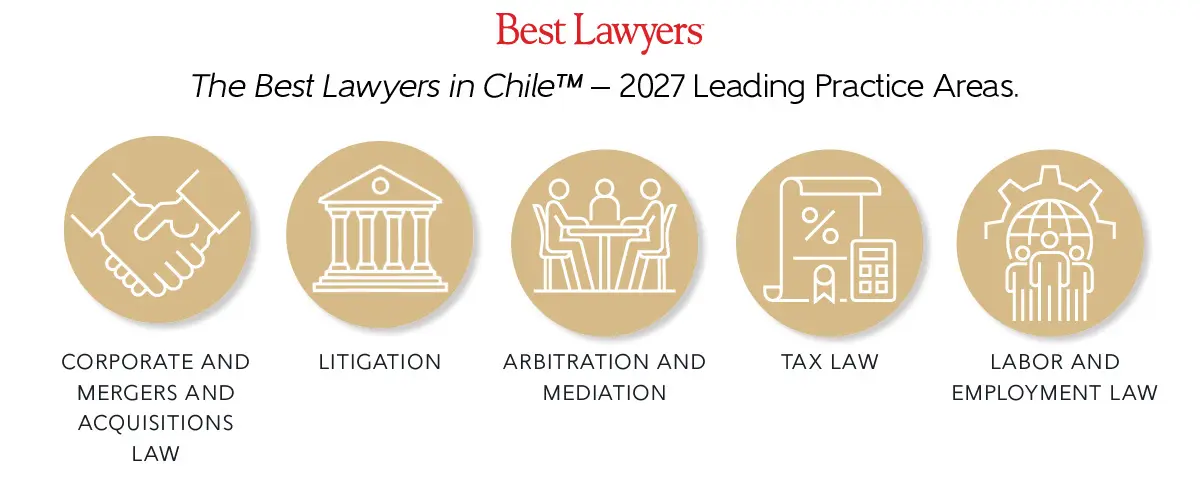
Corporate and Mergers and Acquisitions Law, Litigation and Arbitration and Mediation lead Chile's practice areas by number of recognized lawyers, followed by Tax Law and Labor and Employment Law.
Among honorees in The Best Lawyers: Ones to Watch in Chile™, Litigation leads by number of recognized lawyers, followed by Corporate and Mergers and Acquisitions Law, Arbitration and Mediation, Labor and Employment Law and Tax Law. Although the order differs, both recognitions feature the same five leading practice areas.
Market Developments Across Chile's Leading Practice Areas
Regulatory changes and judicial decisions offer insight into the issues shaping Chile's leading legal specialties.
Corporate and Mergers and Acquisitions Law
Competition oversight plays a significant role in corporate transactions in Chile. In June 2026, the Fiscalía Nacional Económica (FNE) approved Abra Group's acquisition of Sky Airline with conditions addressing certain contractual restrictions. Chile's Supreme Court also clarified rules governing interlocking directorates, while the FNE's merger risk reports offer greater insight into its competition assessments. Together, these developments provide businesses with greater clarity on regulatory expectations during corporate transactions.
Litigation
Commercial disputes continue to test how Chilean courts interpret and enforce contractual obligations. In July 2026, the Supreme Court examined the early termination of a transportation services agreement and found that the contract did not permit unilateral termination without sufficient grounds. The ruling underscores the importance of clear contractual terms in resolving business disputes.
Arbitration and Mediation
Arbitration offers businesses an alternative to traditional court proceedings, particularly in international commercial disputes. In April 2025, the Santiago Arbitration and Mediation Center partnered with the International and Ibero-American Arbitration Center to strengthen international dispute resolution. Judicial oversight also remains significant. In June 2026, the Santiago Court of Appeals annulled an arbitral award after finding that the tribunal exceeded the scope of the parties' claims.
Tax Law
Chile's Law No. 21,713, enacted in 2024, introduced measures to strengthen tax compliance and enforcement. The legislation addresses anti-avoidance provisions, tax audits and financial reporting requirements, prompting businesses to review their tax obligations and corporate structures.
Labor and Employment Law
Chile's phased reduction of the standard workweek continues to affect employment practices. Under Law No. 21,561, the standard workweek decreased to 42 hours in April 2026, with a further reduction to 40 hours scheduled for 2028. Employers must adjust work schedules, employment agreements and workplace policies to comply with the changing requirements.
Explore recognized legal professionals across Chile through our Find a Lawyer in Chile page.
Leading Practice Areas in The Best Lawyers in Colombia
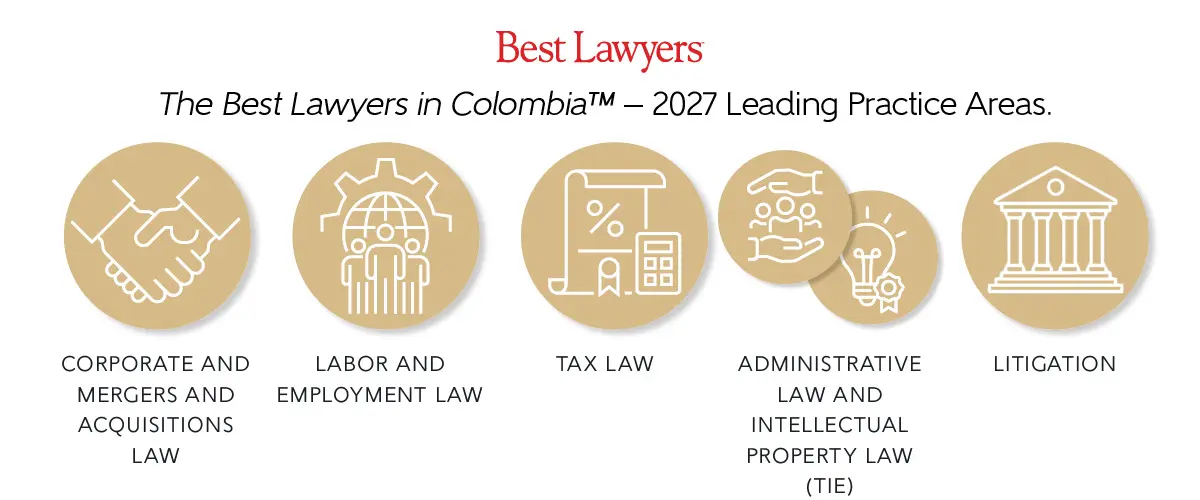
Corporate and Mergers and Acquisitions Law accounts for the largest group of recognized lawyers in Colombia, followed by Labor and Employment Law and Tax Law. Administrative Law and Intellectual Property Law share fourth place, while Litigation completes the five leading positions.
Changes Across Colombia's Legal Landscape
Corporate reforms, labor regulations and developments in public administration and judicial procedures provide context for Colombia's most represented legal specialties.
Corporate and Mergers and Acquisitions Law
Colombia has introduced measures to simplify corporate restructuring and foreign investment compliance. In July 2026, the Superintendence of Companies expanded general authorization for qualifying mergers and spin-offs, allowing more businesses to complete reorganizations without seeking individual approval. An August 2026 decree also eliminated the six-month deadline for registering certain foreign investment changes. The Superintendence of Industry and Commerce oversees merger clearance, requiring companies to assess competition rules when planning transactions.
Labor and Employment Law
Colombia's 2025 labor reform introduced changes affecting working hours, compensation and employment protections. The legislation established a 7 p.m. start for nighttime work and increased the premium for work on mandatory rest days to 90% in July 2026, with a further increase scheduled for 2027. These provisions require employers to review payroll practices, scheduling and workplace policies as they manage compliance with the revised labor framework.
Tax Law
Electronic invoicing plays a central role in Colombia's tax reporting requirements. The National Tax and Customs Directorate (DIAN) administers electronic invoicing requirements that govern transaction documentation, reporting and the substantiation of tax deductions. These rules emphasize accurate financial records and compliance procedures for businesses navigating Colombia's tax system.
Administrative Law
Public procurement transparency plays an important role in Colombia's administrative law. In June 2026, Colombia Compra Eficiente clarified public contracting disclosure obligations, emphasizing that entities using public resources must publish relevant contractual information through the country's electronic procurement system, SECOP. The guidance outlines disclosure responsibilities for public entities involved in government contracting.
Intellectual Property Law
Trademark protection and registration procedures remain important considerations for businesses operating in Colombia. In May 2026, the Superintendence of Industry and Commerce updated its trademark registration procedures, addressing the administrative process for reviewing applications and determining registrability. The updated requirements provide businesses with guidance on securing trademark protection for their brands.
Litigation
Colombia is evaluating the use of digital technologies in judicial proceedings. In March 2026, the Superior Council of the Judiciary launched a nationwide review of Law 2213 of 2022, which established permanent rules for electronic filings, virtual hearings and other digital procedures. The evaluation examines their impact on access to justice and identifies opportunities to improve the administration of judicial proceedings.
Browse Colombia's recognized legal professionals through our Find a Lawyer in Colombia page.
Leading Practice Areas in The Best Lawyers in Puerto Rico
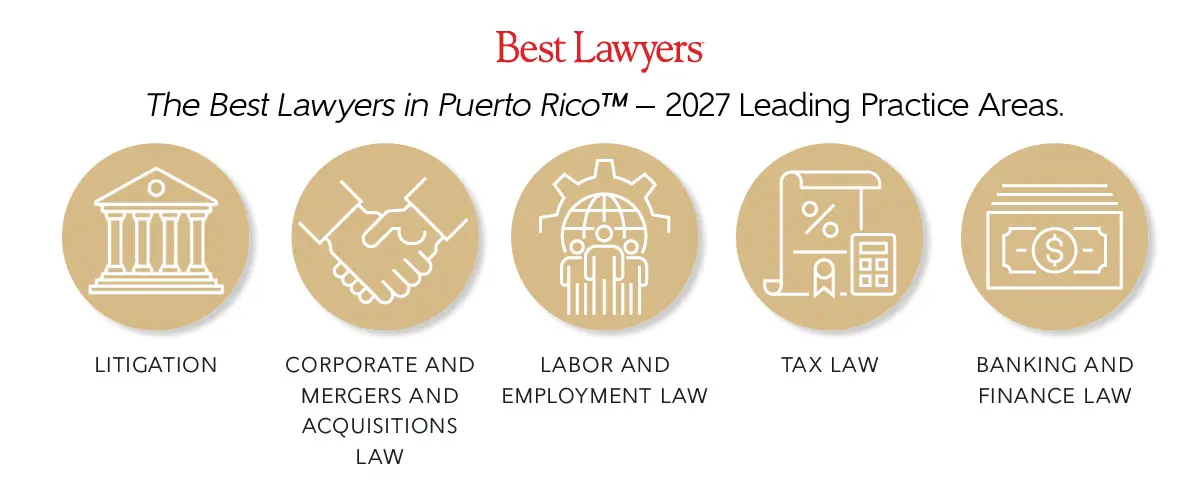
Litigation has the highest number of recognized lawyers in Puerto Rico, followed by Corporate and Mergers and Acquisitions Law and Labor and Employment Law. Tax Law and Banking and Finance Law complete the five leading practice areas.
Key Legal Developments Shaping Puerto Rico's Practice Areas
Judicial decisions, legislative changes and financial regulations offer insight into the issues affecting Puerto Rico's leading legal specialties.
Litigation
Puerto Rico's courts continue to refine civil procedures and judicial access. In August 2026, the Supreme Court clarified the requirements for enforcing money judgments and addressed standards for excluding expert testimony.
Meanwhile, Act 82-2026 established specific pleading requirements for parties challenging permitting decisions and Act 94-2026 amended civil procedure rules concerning property registration.
The judiciary also introduced PROCEDI, a permanent framework for authorized electronic media coverage of court proceedings that took effect in October 2026.
Corporate and Mergers and Acquisitions Law
Businesses pursuing corporate transactions in Puerto Rico must account for local corporate law and applicable federal regulations. The Puerto Rico General Corporations Act provides the legal framework for mergers, acquisitions and corporate reorganizations. The law addresses transaction approvals and corporate governance, establishing requirements for companies undertaking structural changes.
Labor and Employment Law
Puerto Rico's employment laws combine local labor protections with applicable federal requirements. The Puerto Rico Minimum Wage Act established a phased increase in the minimum wage, which reached $10.50 per hour in July 2024. Employers must also navigate wage and hour requirements, workplace policies and employment protections when managing their operations.
Tax Law
Puerto Rico's tax incentive framework continues to evolve. In March 2026, Act 38-2026 amended provisions of the Puerto Rico Incentives Code, updating eligibility requirements and tax benefits for qualifying resident individual investors. The changes also extended the program's scheduled expiration to 2055, with several provisions applying to applications submitted beginning in 2027.
Banking and Finance Law
Financial institutions in Puerto Rico must meet regulatory obligations involving financial reporting and supervisory oversight. The Office of the Commissioner of Financial Institutions (OCIF) has introduced the FIRE System, a financial reporting platform designed to modernize regulatory submissions. The agency's 2026 implementation guidance addresses reporting procedures for regulated institutions, highlighting the importance of accurate financial disclosures and compliance with supervisory requirements.
Find lawyers recognized across a range of practice areas on our Find a Lawyer in Puerto Rico page.
Shared Areas of Legal Recognition Across Markets
The 2027 results for Chile, Colombia and Puerto Rico reveal a notable connection across three distinct legal markets. Corporate and Mergers and Acquisitions Law, Litigation, Labor and Employment Law and Tax Law consistently appear among the leading practice-area positions in all three jurisdictions.
Although the three markets share several leading practice areas, their remaining specialties reflect differences in the distribution of legal recognition across each jurisdiction.
Gender Representation Across Recognized Practice Areas
The 2027 results offer insight into gender representation across selected practice areas in Chile, Colombia and Puerto Rico. In Chile, women make up most recognized lawyers in Family Law and Immigration Law, while Labor and Employment Law shows a nearly even split among The Best Lawyers: Ones to Watch in Chile™ honorees.
In Colombia, women account for the majority of recognized lawyers in Environmental Law, while Criminal Defense shows equal representation. Puerto Rico also records balanced representation in Intellectual Property Law and Employee Benefits Law.
Recognizing Legal Excellence in Chile, Colombia and Puerto Rico
The 2027 editions of the Best Lawyers® Awards in Chile, Colombia and Puerto Rico recognize legal professionals whose peers have acknowledged their abilities and experience across a broad range of practice areas.
As businesses and individuals navigate complex legal matters, these recognitions provide a valuable resource for identifying lawyers whose practice areas align with their legal needs.
Explore leading legal professionals in each country through our Find a Lawyer page.